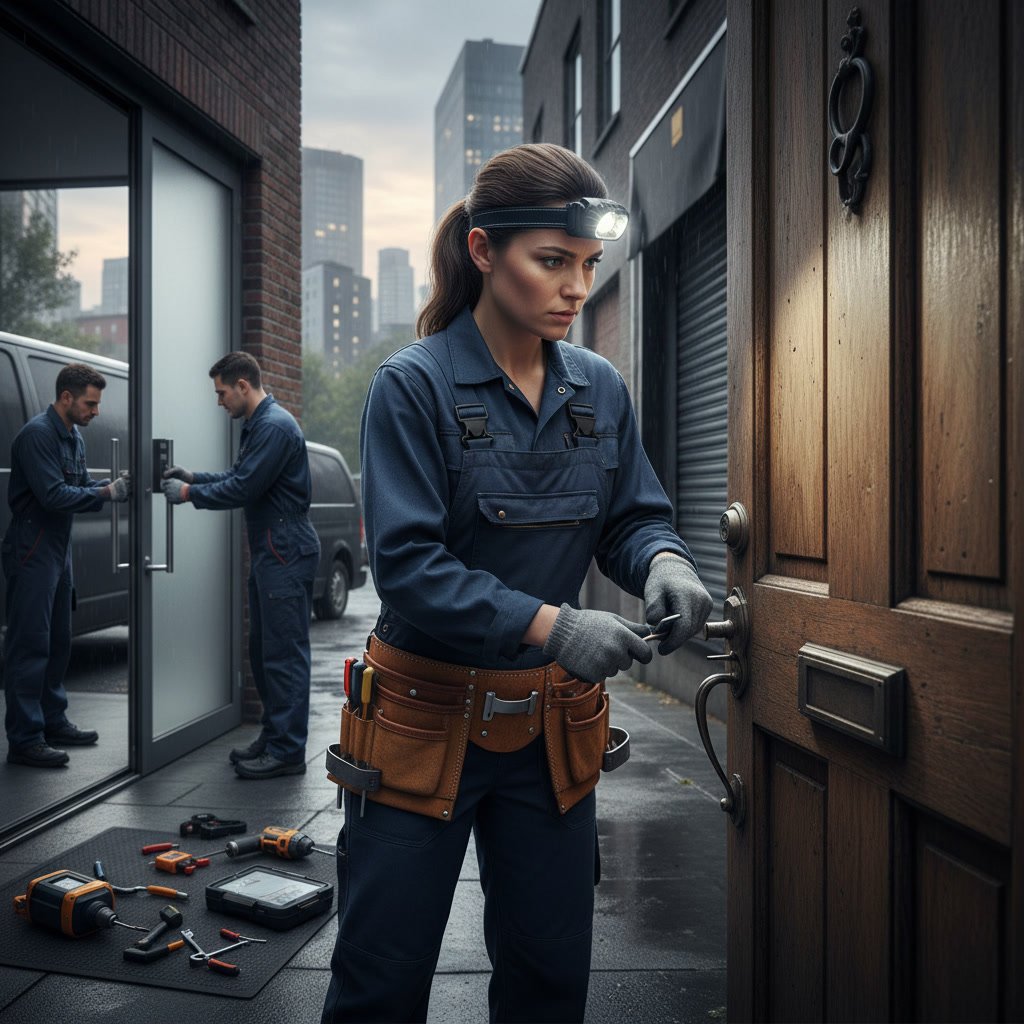
Professional emergency lockout services employ different techniques and tools depending on the type of door or entry point. A standard residential door requires a vastly different approach than a commercial panic bar system or a modern vehicle with a transponder key. Skilled locksmiths assess the specific lock mechanism, door material, and security level before selecting the appropriate method to regain entry without causing unnecessary damage.
Understanding the Complexity of Modern Entry Systems
Entry points today range from simple pin tumbler locks to sophisticated electronic access control systems. Each type presents unique challenges during a lockout situation. The materials used in door construction, whether wood, steel, fiberglass, or glass, also influence the approach a technician takes. Understanding these variables helps explain why professional locksmith services remain essential rather than attempting DIY solutions that often result in costly damage.
How Residential Door Lockouts Differ from Commercial Situations
Residential lockouts typically involve single-cylinder deadbolts and knob locks on wood or metal doors. These situations often allow for non-destructive entry using pick tools or bypass techniques that preserve the existing hardware. Homeowners usually prioritize quick entry with minimal visible evidence of the lockout.
Commercial properties present different challenges. Many businesses use grade one commercial locks, panic bars, and multi-point locking systems designed to prevent unauthorized entry. These systems require specialized knowledge and tools. A technician working on a commercial lockout must also consider fire codes and accessibility requirements that govern how quickly occupants can exit during an emergency.
The stakes differ as well. A residential lockout might mean someone cannot access their bedroom, while a commercial lockout could prevent employees from opening a business or accessing critical inventory. Response priorities and methods adjust accordingly.
Standard Residential Door Lock Techniques
Most homes use pin tumbler deadbolts and spring latch locks. For these common systems, technicians typically attempt picking first. This process manipulates the internal pins to the correct height, allowing the cylinder to turn without a key. The method leaves no trace and preserves the lock completely.
When picking proves difficult due to security pins or worn components, technicians may use bypass methods. Sliding tools can manipulate the latch mechanism directly on certain spring locks. For deadbolts without these vulnerabilities, drilling becomes necessary. A skilled locksmith drills only the minimum required, targeting the driver pins or shear line to allow opening while keeping the door and frame intact.
Vehicle Lockout Methods Across Different Makes and Models
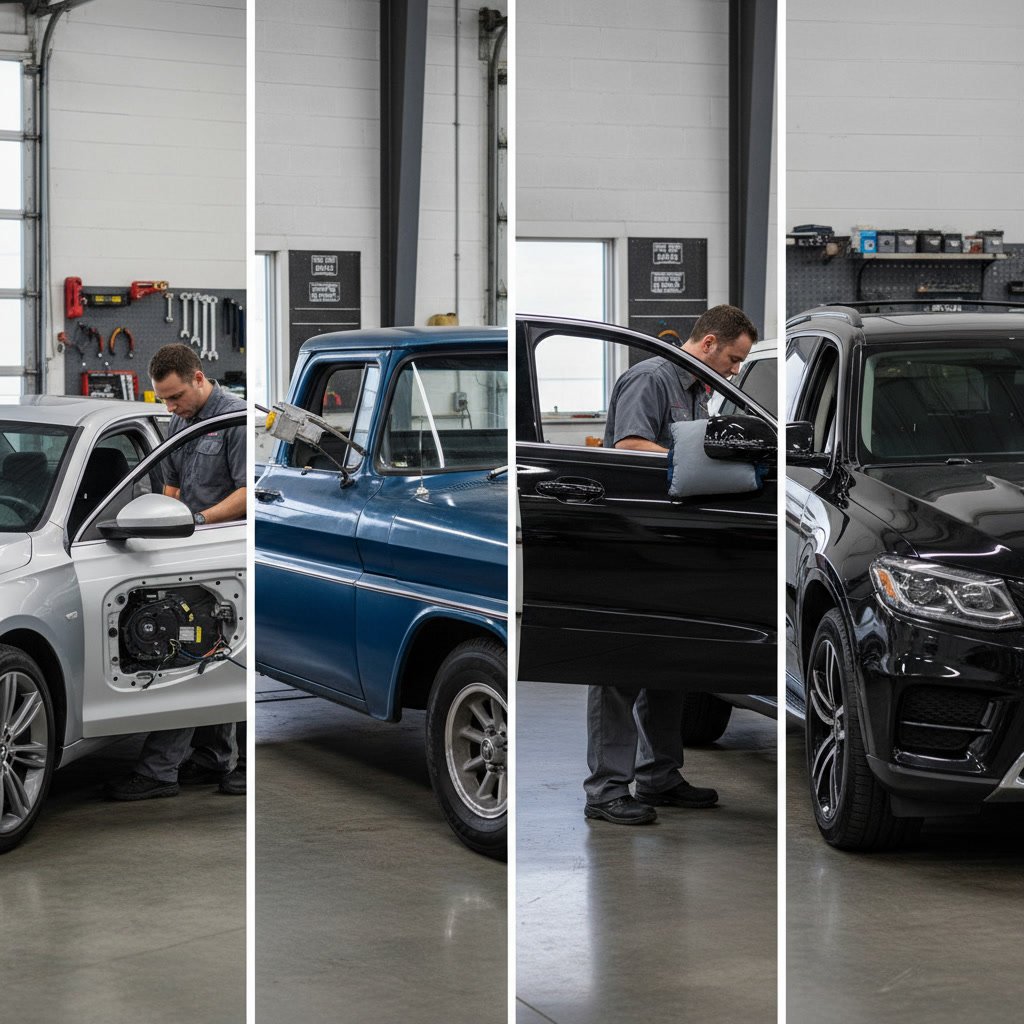
Automotive lockouts have evolved dramatically over the past two decades. Older vehicles with traditional lock cylinders can often be opened using slim jim tools that manipulate internal linkages. However, this method damages many modern vehicles with side-impact airbags and electronic components in the door panels.
Current vehicle entry relies heavily on wedge and reach tools. Technicians create a small gap at the top of the door frame, insert an inflatable wedge, and use a long reach tool to press the unlock button or pull the interior handle. This approach works on most vehicles without causing damage.
Vehicles with electronic systems and transponder keys present additional complexity. Simply unlocking the door does not solve the problem if the key fob is inside and the vehicle requires a coded signal to start. Automotive locksmith services must have programming equipment to create new transponder keys on-site for these situations.
Commercial Panic Bars and Emergency Exit Systems
Panic bars, also called crash bars or exit devices, are designed to allow rapid exit during emergencies. They should never be locked from the outside in a way that prevents interior exit. However, these systems frequently lock out business owners who exit without keys.
The rim-mounted panic bar is the simplest type, with a latch that retracts when someone pushes the bar. Technicians can sometimes bypass these using thin tools inserted between the door and frame. Vertical rod systems that engage at both the top and bottom of the door require different approaches, often involving disassembly of the exterior trim or strike plates.
Electrified panic bars connected to access control systems add another layer. These might require temporary power manipulation or system overrides that only trained professionals should attempt. Improper handling can trigger alarms or damage expensive electronic components.
Specialized Tools for Ashland Glass Doors and Storefronts
Glass doors with aluminum frames, common in retail locations throughout Ashland, require extreme care during lockouts. The tempered glass can shatter if tools apply pressure to the wrong points. Most glass door locks are mortise-style cylinders recessed into the narrow door edge.
Technicians working with glass entry points use specialized picks designed for mortise locks. These tools require considerable skill because the keyway is often limited and positioned awkwardly. Drilling glass door locks demands precision since the door edge provides minimal working space and any deviation can crack the glass.
Storefront lockouts often occur when keys break off inside the cylinder. In these cases, extracting the broken key fragment becomes the priority before any other method will work. Specialized extraction tools hook or grip the broken piece for removal.
Electronic and Smart Lock Challenges
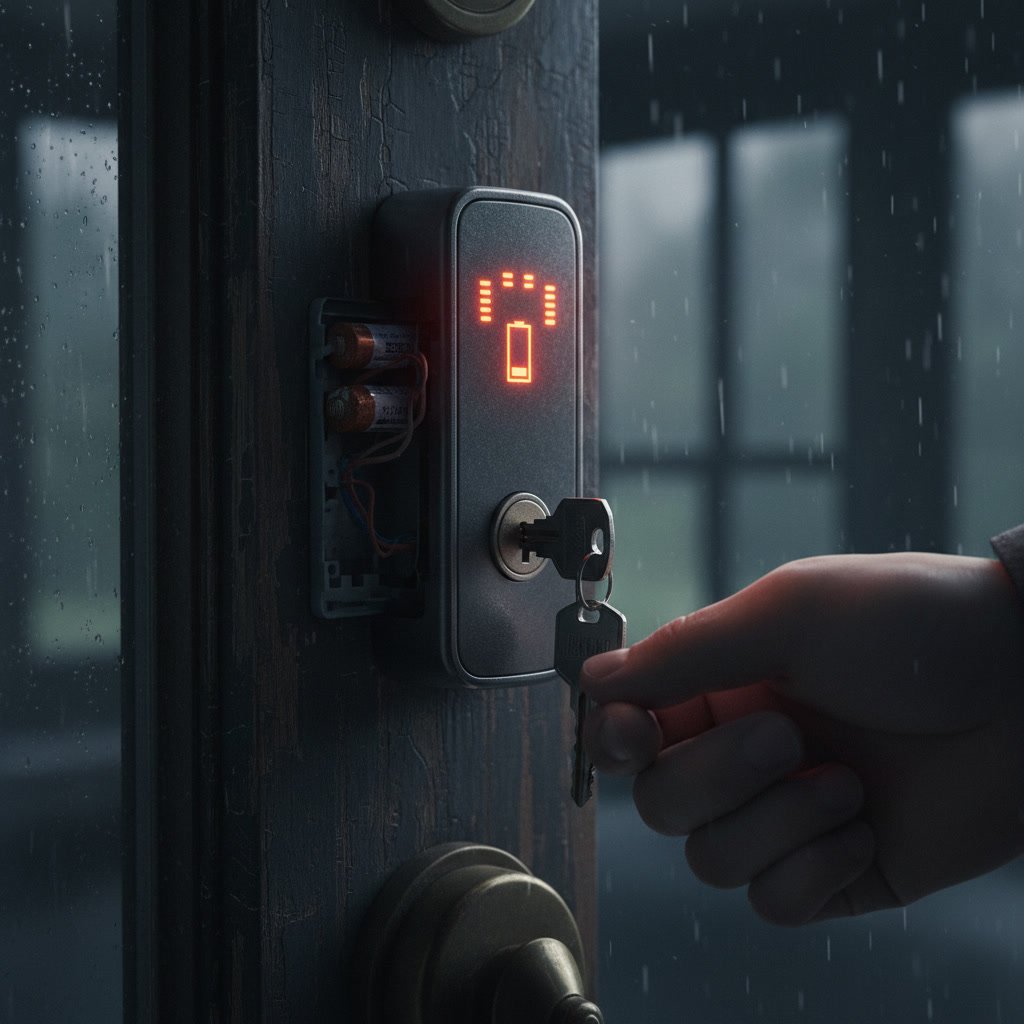
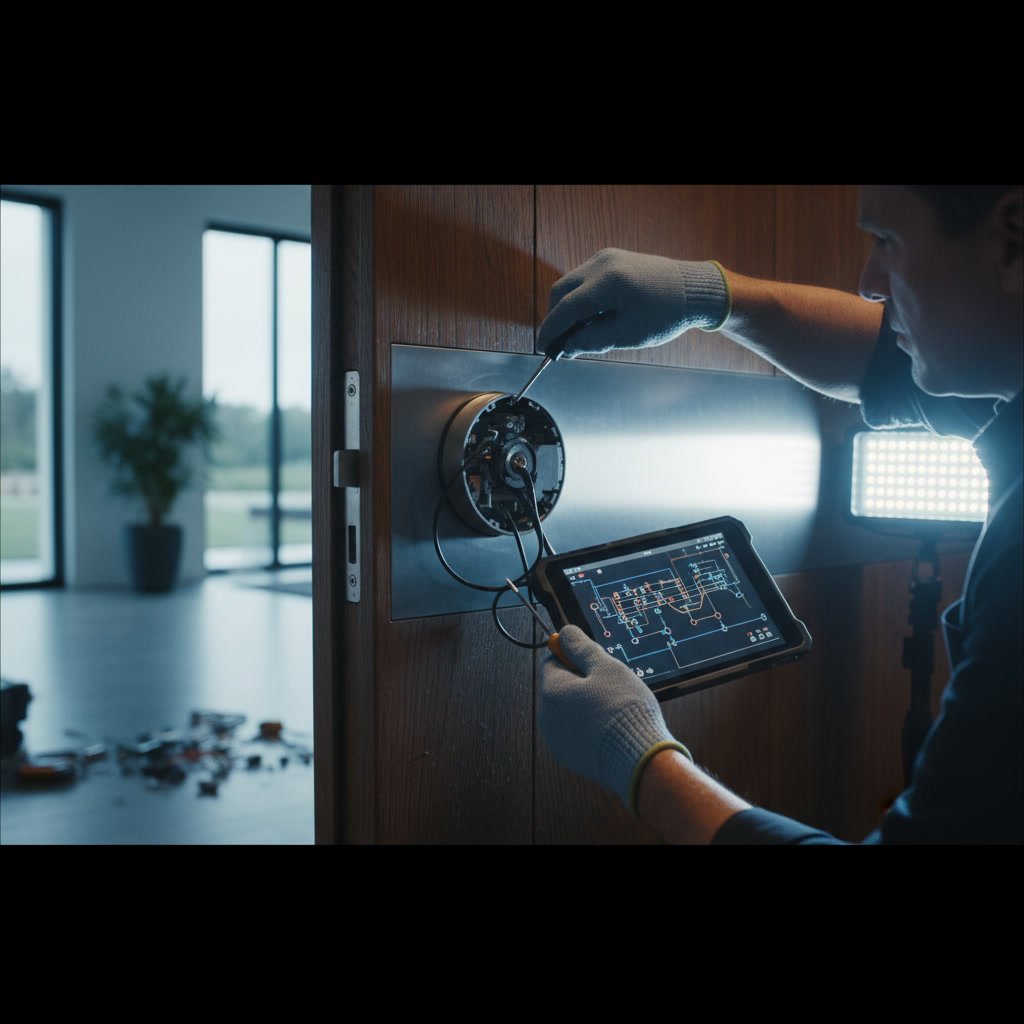
Electronic locks powered by batteries create unique lockout scenarios. When batteries die, many electronic locks revert to a mechanical key override. However, occupants often do not know where this override cylinder is located or lack the physical backup key. Technicians must locate the mechanical override, which manufacturers sometimes hide beneath decorative covers or in non-obvious locations.
Some electronic systems lock down completely when batteries fail, requiring the technician to provide temporary external power to the lock. This process requires knowledge of the specific lock model and voltage requirements to avoid damaging sensitive electronics.
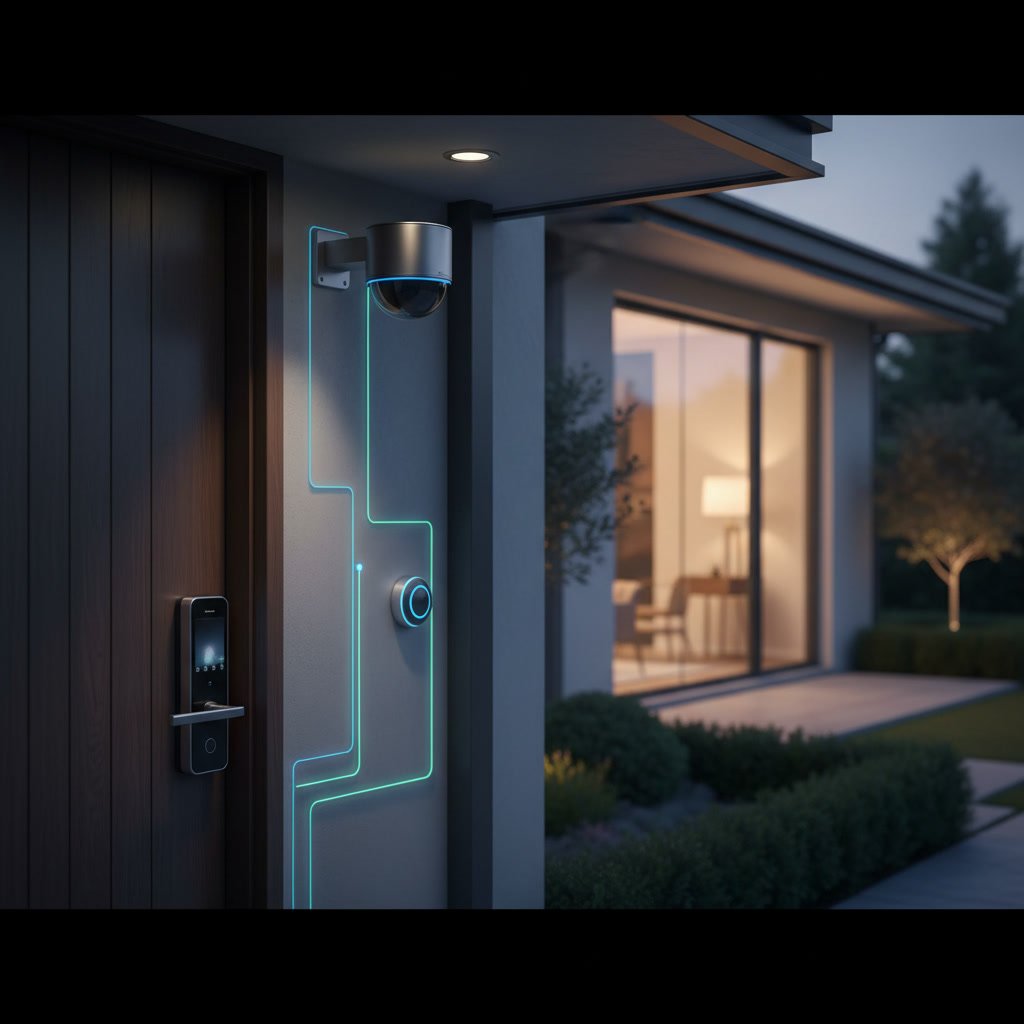
Smart locks connected to home automation systems might require troubleshooting the wireless connection or access control software rather than traditional lock manipulation. When you’re dealing with a lockout involving electronic security installation components, the solution often involves technology as much as mechanical skill.
High Security Lock Systems and Restricted Keyways
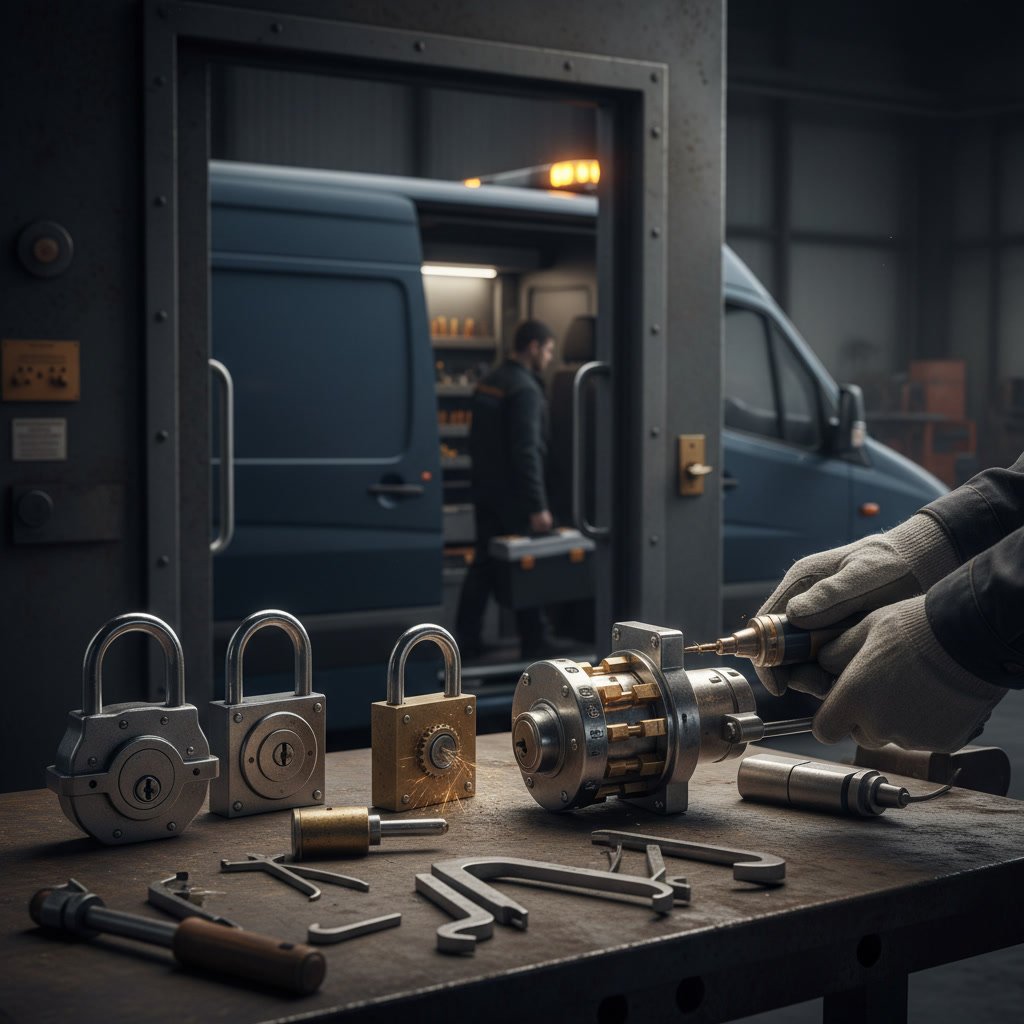
High security locks from manufacturers like Medeco, Mul-T-Lock, and ASSA use patented keyways and advanced pin configurations that resist traditional picking methods. These locks often feature side pins, rotating elements, or magnetic components that require specialized picks and extensive training to manipulate.
Many high security lockouts require drilling, but even this approach becomes complicated. These locks incorporate hardened steel inserts, ball bearings, and other drill-resistant features. Carbide or diamond-coated bits become necessary, and the drilling process takes significantly longer than standard locks.
Property owners who invest in high security locks should understand that lockout service will take more time and likely cost more due to the specialized tools and expertise required. The extra security that protects against unauthorized entry also makes legitimate emergency access more challenging.
Multi-Point Locking Systems on Exterior Doors
Multi-point locks engage at three or more points along the door edge, typically at the top, middle, and bottom. European-style doors and high-end residential installations frequently use these systems. During a lockout, all engagement points must be released before the door opens.
The central cylinder controls the entire system, so gaining access to this main lock is the priority. However, even after picking or bypassing the cylinder, the handles or thumb turns inside must still be operated to fully retract all locking points. In some cases, technicians must remove exterior trim or create access through a nearby window to reach the interior hardware.
These situations highlight why knowing what to tell the dispatcher about your specific door type helps technicians arrive prepared with the correct tools.
Gate and Fence Access Points
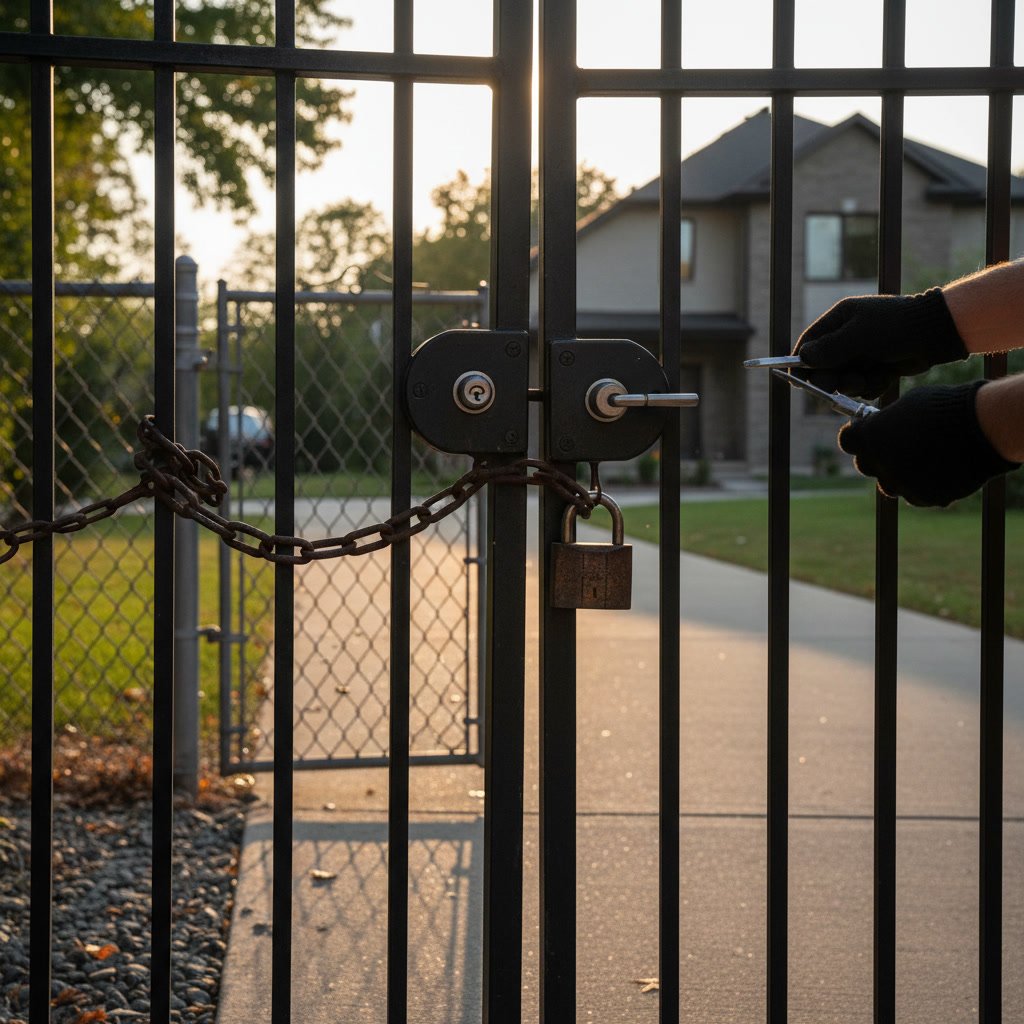
Lockouts are not limited to building doors. Gates with electronic or mechanical locks also trap people outside properties. Wrought iron gates, privacy fence doors, and security perimeter gates each present distinct challenges based on their lock types and installation methods.
Many gate locks mount in exposed positions, making them somewhat easier to manipulate than recessed door locks. However, weather exposure often corrodes internal components, making standard techniques ineffective. Technicians must assess whether rust and corrosion have compromised the lock to the point where replacement is more practical than picking.
Electronic gate systems with keypads or card readers might require bypassing the control board or providing alternative power. Some systems include mechanical key overrides, while others require accessing the control panel inside the secured area, creating a circular problem that demands creative solutions.
Your Entry Point Determines the Solution
The specific door or entry point facing you during a lockout determines which tools and techniques will restore access most efficiently. Trying to force entry yourself risks damage that turns a simple service call into an expensive repair project involving new doors, frames, or lock hardware.
Professional locksmiths carry dozens of specialized tools because no two lockouts are identical. The hollow-core bedroom door in your home requires completely different handling than the solid-core exterior door or the vehicle in your driveway. Understanding these differences explains why qualified technicians complete the job faster and with less damage than well-meaning attempts using household tools.
Whether you face a residential, commercial, or automotive lockout, the methods used to regain entry balance speed, preservation of existing hardware, and cost-effectiveness. The right approach depends on accurately assessing the entry point and selecting tools that match the specific challenge.
Solution Locksmith LLC handles lockouts involving every type of door and entry point across residential, commercial, and vehicle applications. Our technicians carry the specialized tools and training needed for standard locks, high security systems, and electronic access controls throughout the region. When you find yourself locked out, contact us at +15403392006 for professional service that gets you back inside quickly while protecting your property from unnecessary damage.