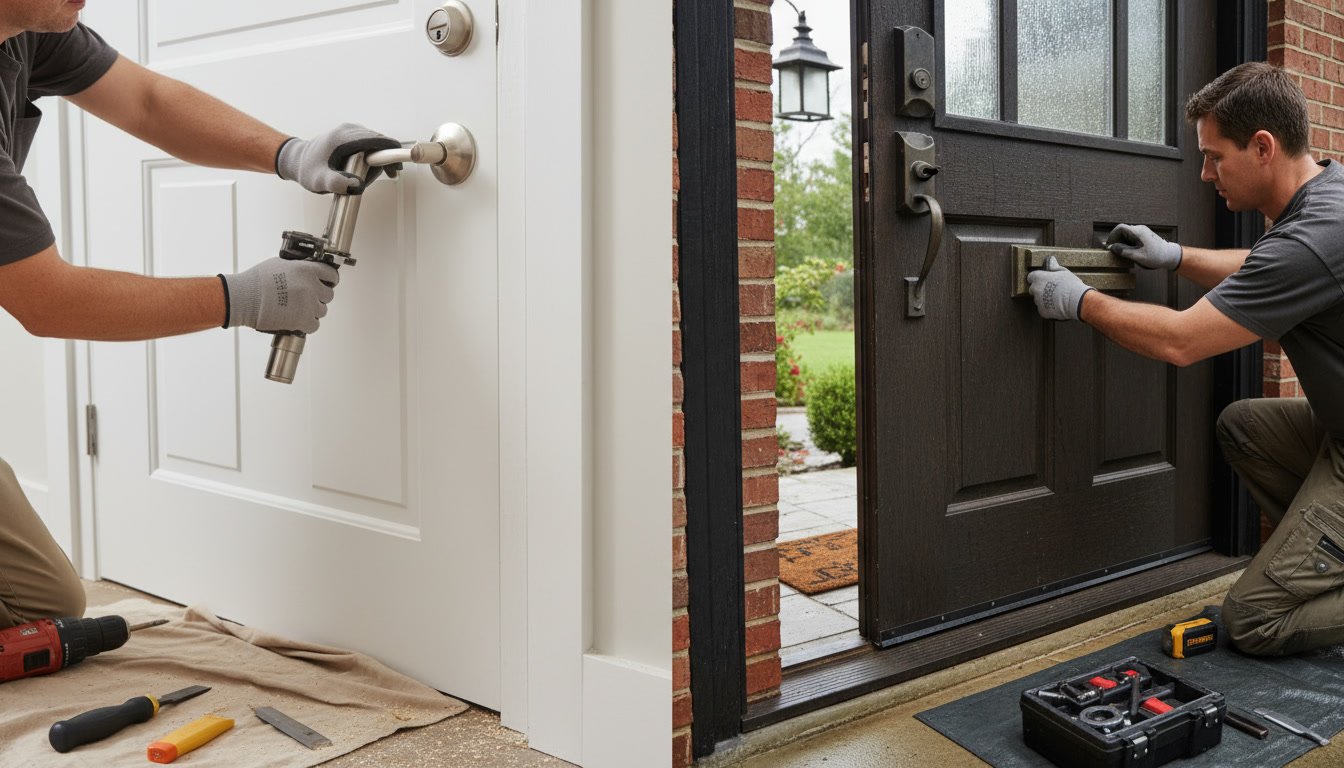
Commercial door locks rarely fail without warning. Most give clear signals days or even weeks before complete failure. Recognizing these warning signs allows you to schedule commercial door lock repair before an unexpected lockout disrupts your business operations, leaving employees stranded or compromising your building security.
Business owners who ignore early symptoms often face emergency situations at the worst possible times. Understanding what to watch for protects your investment, maintains security, and prevents the higher costs associated with emergency repairs or forced entry damage.
How Commercial Locks Differ from Residential Hardware
Commercial door locks endure significantly more stress than residential models. While a home lock might cycle 10 times daily, commercial locks in busy offices, retail spaces, or warehouses can cycle 100 or more times per day. This accelerated wear demands higher-grade components and more frequent maintenance.
Commercial-grade locks also incorporate security features that residential hardware lacks. Many include hardened steel components, anti-pick pins, and reinforced strike plates designed to withstand forced entry attempts. These specialized parts require professional expertise when problems develop, particularly in high-traffic locations throughout Richmond and surrounding commercial districts.
Why Timing Matters When You Notice Lock Problems
The gap between the first symptom and complete failure creates a critical window. During this period, you control the timeline for repairs. You can schedule service during off-hours, budget appropriately, and avoid operational disruptions.
Once a lock fails completely, you lose that control. Emergency repairs cost more, often require rushed decisions about replacement options, and may force you to leave your property unsecured or restrict access during business hours. The financial difference between planned maintenance and emergency response can reach three to five times the cost for identical work.
The Key Turns But Feels Sticky or Catches
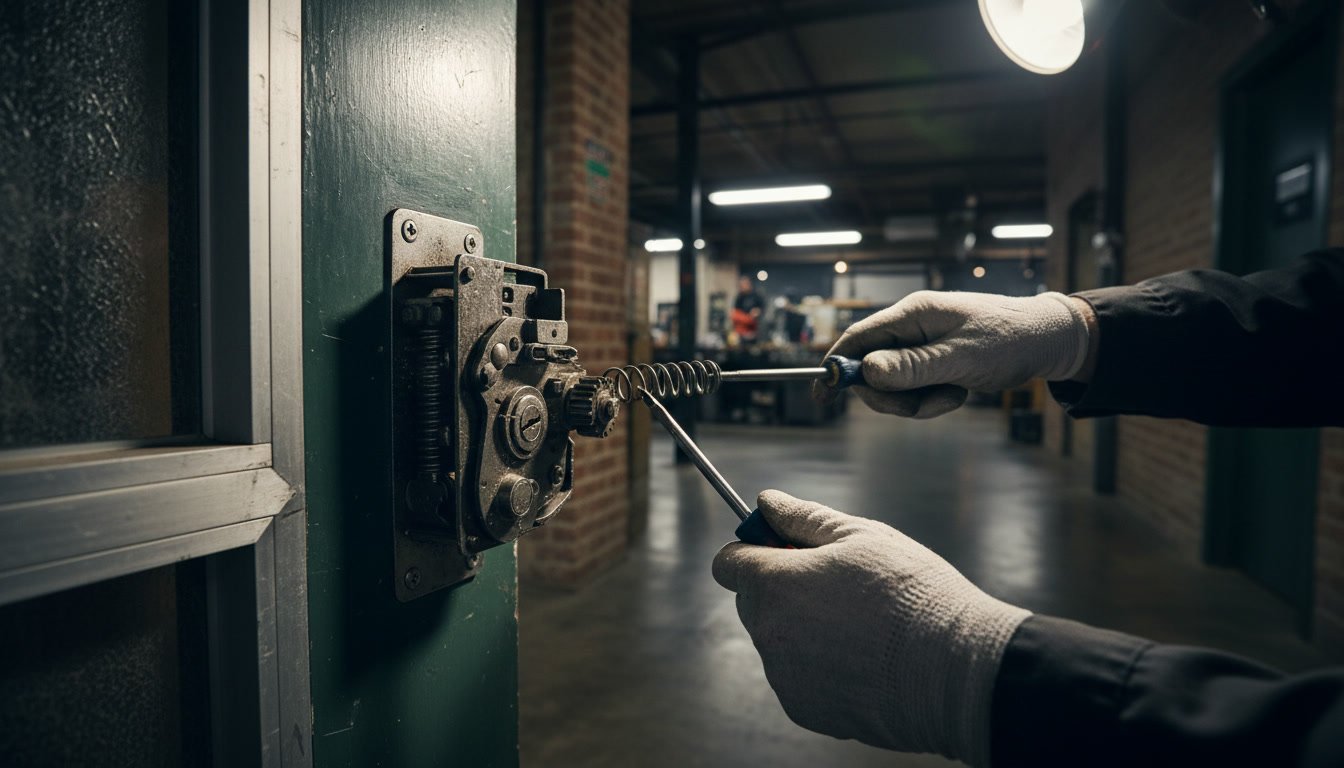
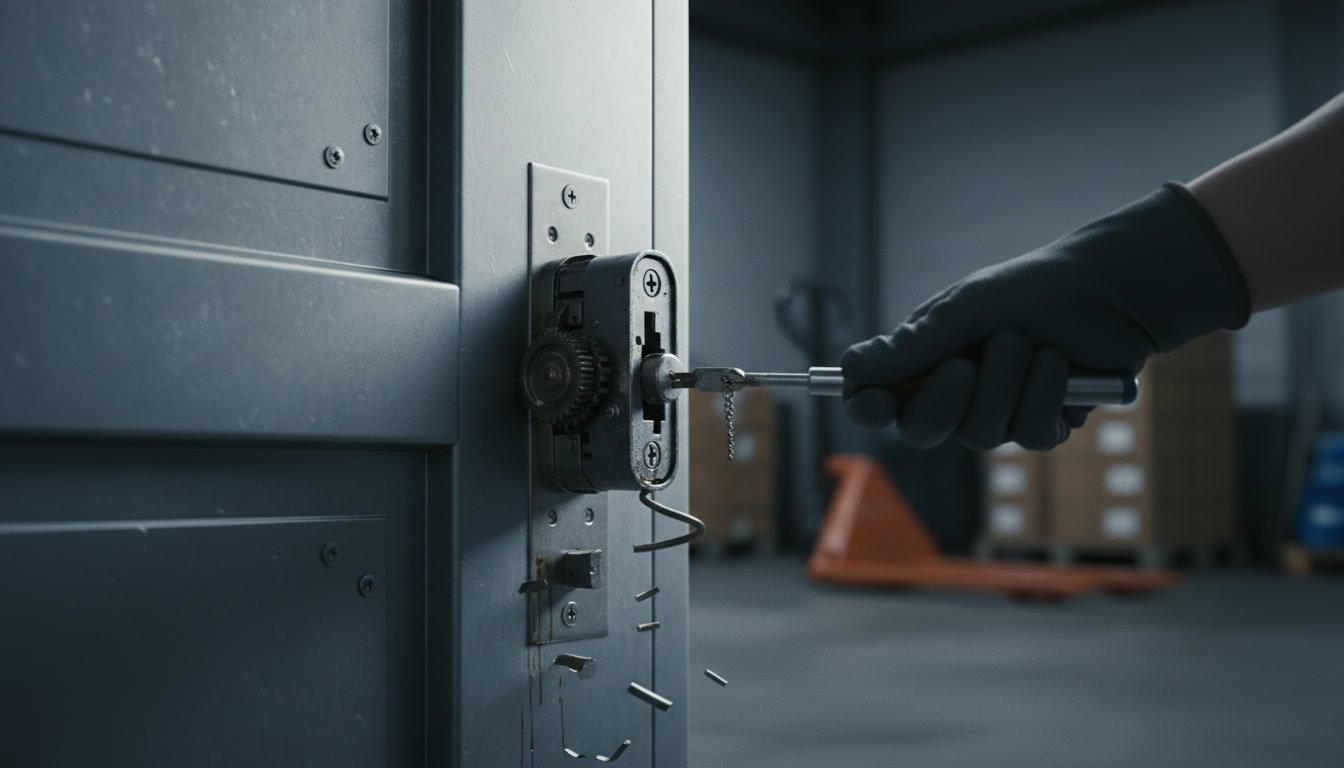
A key that no longer turns smoothly indicates internal wear or debris accumulation. Commercial locks use spring-loaded pins that must align precisely for the cylinder to rotate. When these pins wear or the cylinder collects metal shavings from repeated use, you feel increased resistance.
This stickiness progresses gradually. What starts as slight friction becomes a noticeable catch, then requires force to turn. Eventually, the key stops turning completely or breaks inside the cylinder. The progression timeline varies based on usage frequency but typically spans two to six weeks once you first notice the problem.
Visible Gaps Between the Door and Frame
Proper lock function depends on precise alignment between the bolt and strike plate. When doors settle, hinges loosen, or frames shift, gaps appear that prevent the bolt from engaging fully. You might notice the door doesn’t sit flush when closed, or the bolt struggles to enter the strike plate opening.
This misalignment forces excessive stress on the lock mechanism. Each time you turn the key, internal components bend slightly beyond their designed tolerance. Over repeated cycles, this stress causes metal fatigue and premature failure. Professional key and lock repair services can realign the strike plate or adjust hinges before permanent damage occurs.
The Lock Makes Unusual Grinding or Clicking Sounds
New or properly maintained locks operate nearly silently. Grinding sounds indicate metal-on-metal contact where lubrication has failed or components have worn beyond acceptable tolerances. Clicking suggests broken springs or pins moving incorrectly within the cylinder.
These sounds provide diagnostic information. A grinding noise when inserting the key points to cylinder wear. Grinding during the turn indicates problems with the cam or tailpiece that connects the cylinder to the bolt mechanism. Clicks when locking or unlocking suggest spring failure in the pin stack or latch assembly.
Difficulty Locking or Unlocking from One Side in Ashland Businesses
Commercial locks that work smoothly from outside but stick from inside, or vice versa, reveal specific mechanical issues. This asymmetric function typically indicates problems with the thumb turn mechanism, internal linkage, or a partially seized cylinder.
Many Ashland business owners notice this problem first thing in the morning or at closing time when the same person consistently uses one side. The pattern becomes obvious when different employees report contradictory experiences. This symptom requires immediate attention because it suggests the lock may fail to open from one direction entirely, potentially creating a safety hazard during emergencies.
Loose or Wobbly Lock Hardware
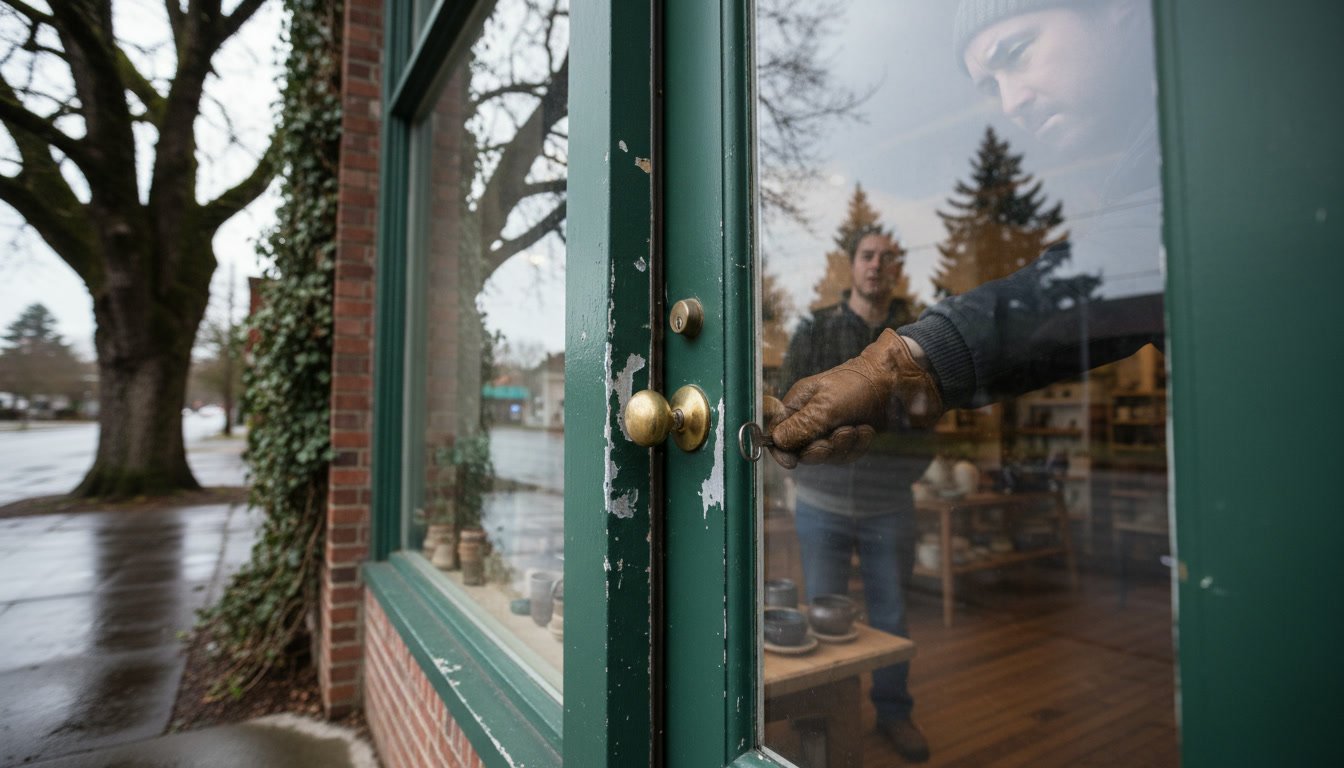
Secure mounting is essential for lock function and security. When you can wiggle the lock cylinder, turn the entire assembly, or notice the escutcheon plate moves independently from the door, the mounting screws have loosened or the door material around them has degraded.
Vibration from door closures gradually loosens hardware over time. In solid core doors, this takes years. In hollow metal doors or those with damaged cores, it happens much faster. Loose hardware allows the internal mechanism to shift out of alignment with each use, accelerating wear on every component simultaneously.
Five Critical Warning Signs Ranked by Urgency
Not all symptoms demand equal response speed. Here is how to prioritize when you notice multiple issues:
- Key breaks or gets stuck inside the cylinder: requires immediate professional extraction to avoid permanent damage to the lock and prevent lockout
- Bolt fails to extend or retract fully: compromises security and indicates imminent complete failure within days
- Visible cracks in the lock body or cylinder: structural failure that will worsen rapidly under normal use
- Dramatic increase in difficulty turning the key over 48 hours: suggests sudden internal breakage rather than gradual wear
- Lock functions but wobbles significantly: indicates mounting failure that will accelerate other problems if not corrected
Understanding this hierarchy helps you communicate urgency when scheduling professional service.
Rust, Corrosion, or Discoloration Around the Lock
Surface rust on exterior commercial locks is common in Virginia’s humid climate, but rust around the keyway or on internal components signals serious problems. Moisture inside the cylinder causes pins to corrode and seize, cylinders to freeze, and springs to weaken or break.
Green discoloration on brass components or white powdery deposits on aluminum or steel parts indicate active corrosion. Once this process starts internally, it progresses even without additional moisture exposure. The corrosion products expand, jamming moving parts and eventually making the lock inoperable. Professional lock installation of weather-resistant hardware prevents this issue in vulnerable locations.
Electronic Locks Showing Intermittent Behavior
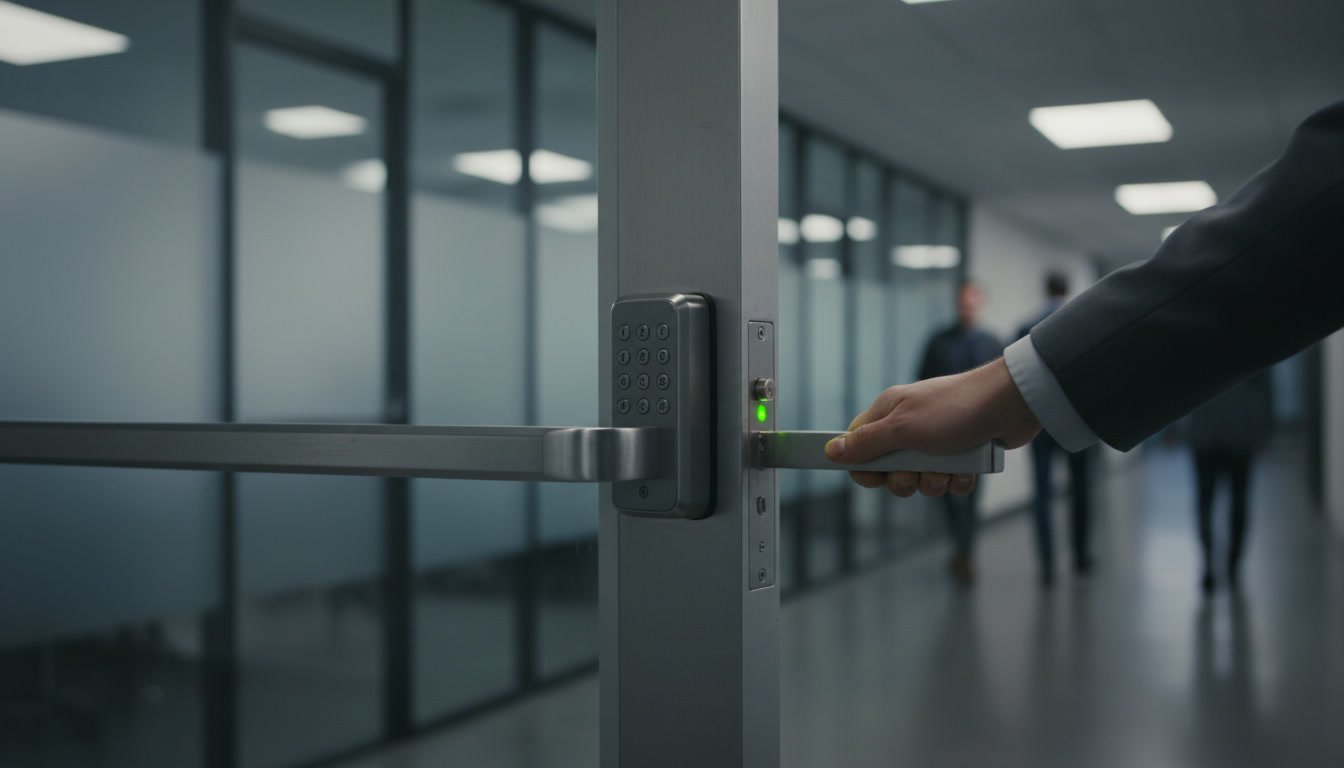
Modern commercial security often includes electronic components. When electronic locks begin accepting valid credentials inconsistently, requiring multiple attempts, or activating without input, electrical or mechanical-electrical interface problems have developed.
Battery-powered systems give specific warnings before failure, similar to patterns described in detail when residential electronic locks begin failing. Commercial systems add complexity with networked access control, multiple credential types, and audit requirements. Intermittent behavior in these systems requires specialized diagnostic equipment to isolate whether the problem lies in the lock mechanism, control board, wiring, or central system.
Previous Break-In Attempts or Forced Entry Signs
Locks that have withstood tampering or forced entry attempts often sustain internal damage that does not immediately prevent operation. You might notice fresh scratches around the keyway, dents in the lock body, or small deformations in the bolt or strike plate.
Even unsuccessful break-in attempts compromise lock integrity. Picking tools can leave tool marks inside the cylinder and bend pins. Prying attempts can stress the bolt mechanism beyond designed limits. Forced rotation attempts can crack the cylinder housing or cam. These locks may continue functioning for days or weeks before the damaged components finally fail, often at critical moments.
Protecting Your Business with Proactive Lock Maintenance
Recognition of these warning signs gives you control over your security timeline. Early intervention through professional assessment prevents the cascade of problems that turn minor wear into major failures. Regular inspection schedules, typically every 12 to 18 months for high-traffic commercial locations, catch problems before symptoms become obvious.
Professional locksmiths assess not just the lock itself but the entire door assembly, frame alignment, and usage patterns. This comprehensive approach identifies contributing factors like settling foundations, loose hinges, or inadequate weather sealing that accelerate lock wear. Addressing these issues extends lock life and maintains security performance.
Solution Locksmith LLC provides comprehensive assessment and repair services for commercial properties throughout the region. Whether you have noticed one warning sign or multiple symptoms, professional evaluation determines whether repair, adjustment, or replacement offers the best value. Our technicians service businesses across Henrico, Stafford County, and surrounding areas with flexible scheduling that minimizes disruption to your operations. Contact us at +15403392006 to schedule an inspection before minor issues become major problems.