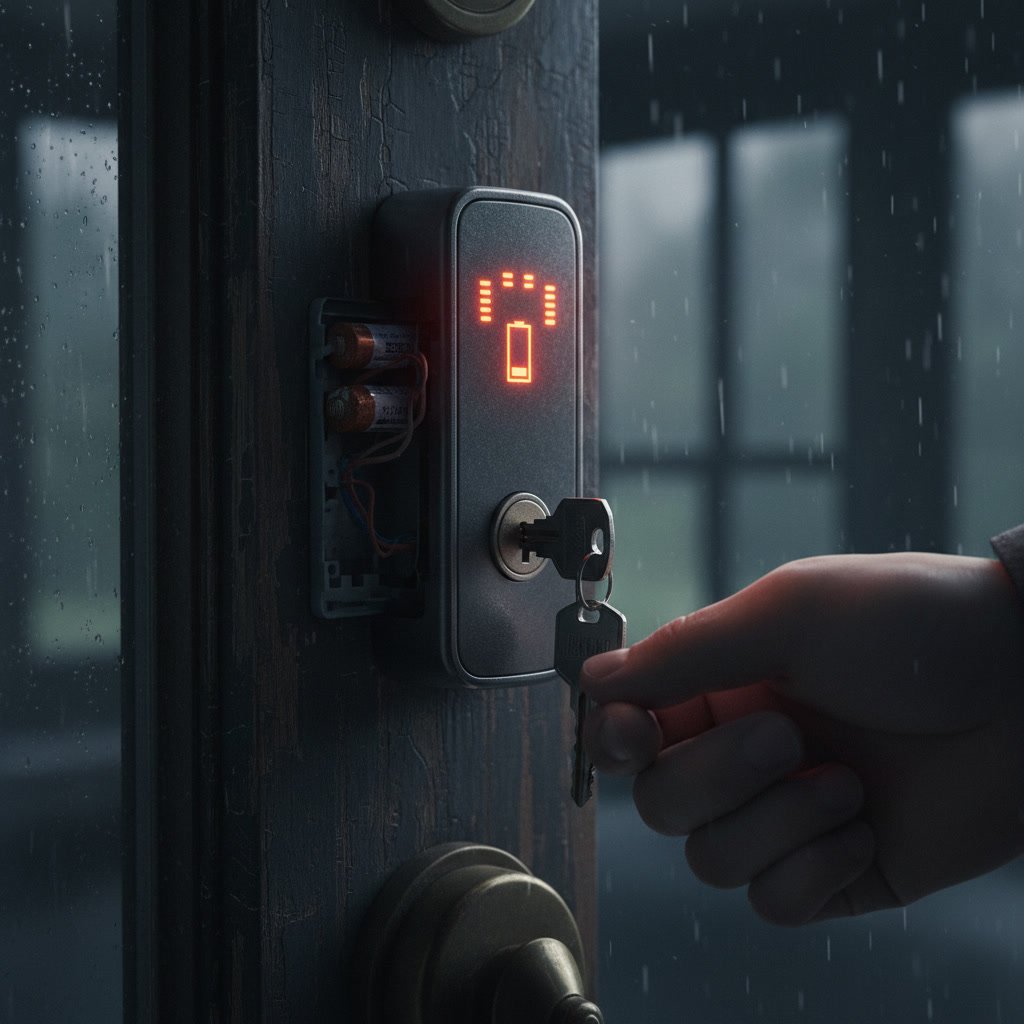
Most electronic locks will give you clear warning signs before the battery fails completely, typically providing 10 to 30 days of advance notice through specific indicators. Recognizing these symptoms of an electronic lock battery dying can save you from an inconvenient lockout and costly emergency service calls. The typical electronic lock battery lasts six to 12 months under normal use, but environmental factors and usage patterns can significantly shorten this lifespan.
Why Electronic Lock Batteries Fail Faster Than Expected
Electronic lock manufacturers design their products with battery life estimates based on ideal conditions, but real-world performance varies dramatically. Temperature extremes are the primary culprit. When your lock endures Virginia summers above 90 degrees or winters below freezing, battery chemistry degrades faster. Alkaline batteries lose up to 50% of their capacity at temperatures below 32 degrees.
High-traffic entry points drain batteries more quickly because every unlock cycle draws power. A front door that sees 15 to 20 uses per day will exhaust batteries twice as fast as a secondary entrance used only occasionally. Wireless connectivity features like Wi-Fi or Z-Wave integration draw continuous background power, reducing battery life by 30% to 40% compared to standalone keypads.
The Evolution of Smart Lock Power Management
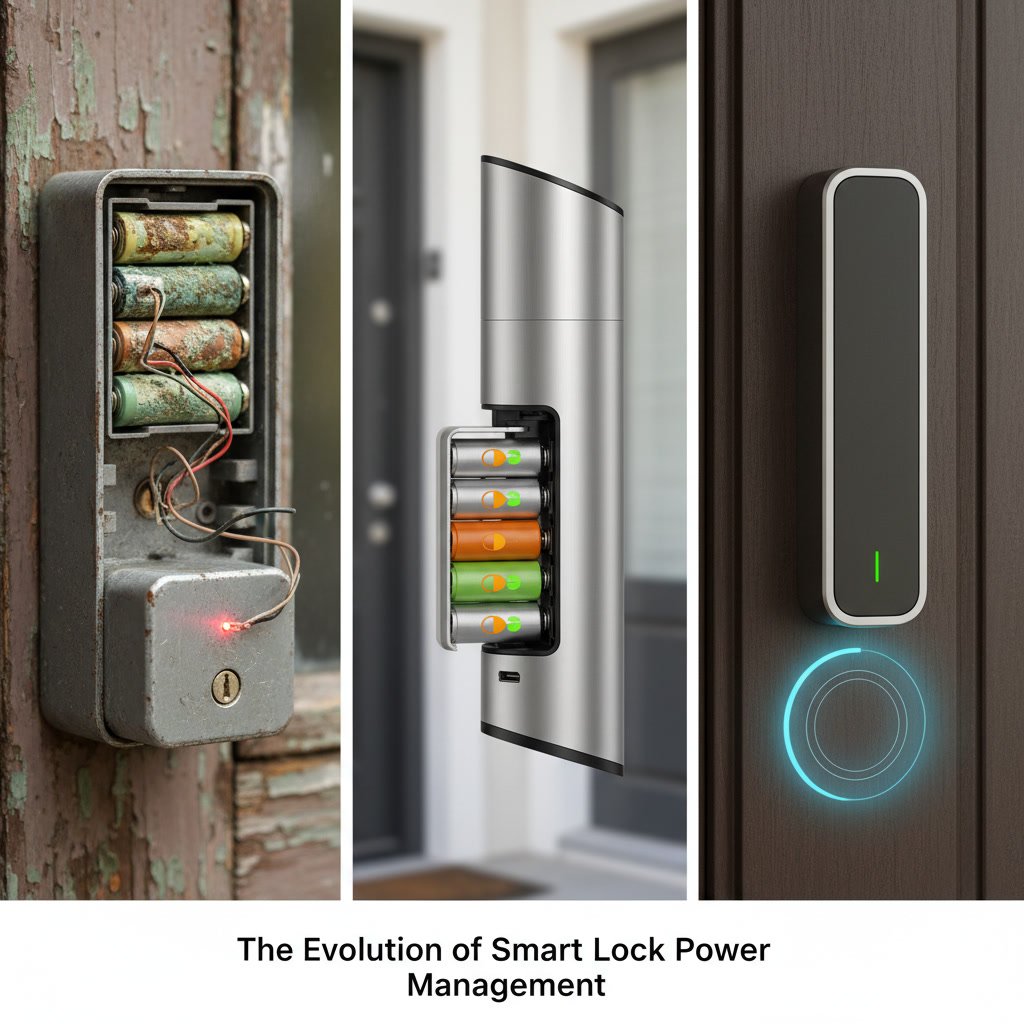
Modern electronic locks have become substantially more efficient than models from even five years ago. Early smart locks from 2015-2018 often required battery changes every two to three months. Today’s generation uses low-power Bluetooth chips and optimized firmware that extends runtime significantly.
Despite these improvements, battery failure remains the leading cause of electronic lock malfunctions. Professional Electronic Security Installation services always emphasize battery maintenance as part of system setup because prevention is far simpler than dealing with a dead lock.
Delayed Response Time When Entering Your Code
One of the earliest warning signs appears when your lock hesitates before responding to button presses. A healthy electronic lock should register each keypress within a fraction of a second and provide immediate feedback through beeps or LED flashes. When you notice a lag of one to two seconds between pressing numbers and hearing confirmation tones, battery voltage has likely dropped below optimal levels.
This delay occurs because weakened batteries cannot deliver sufficient current for the processor to operate at full speed. The lock still functions, but the microcontroller enters a power-saving mode that slows all operations. If you experience this symptom, plan to replace batteries within the next two weeks.
Dim or Flickering Indicator Lights
The LED indicators on your electronic lock require stable voltage to maintain consistent brightness. When batteries begin to fail, you’ll notice the backlit keypad appears dimmer than usual, especially in low-light conditions. Some locks display flickering or inconsistent illumination where certain numbers light up brighter than others.
This visual cue is particularly reliable because LEDs are sensitive to voltage fluctuations. Even a 10% to 15% drop in battery power becomes immediately visible through reduced light output. Take this warning seriously because once lights begin to dim noticeably, you typically have less than one week before complete failure.
Eight Clear Warning Signs Before Complete Battery Failure
Recognizing multiple symptoms simultaneously indicates urgent battery replacement is needed. Watch for these specific indicators:
- Low battery warning beeps or chimes when you enter your code, typically three short tones
- Flashing red or amber LED that wasn’t previously active
- Lock requires multiple code entry attempts before responding
- Motorized deadbolt moves more slowly than normal or makes grinding sounds
- Touchscreen becomes less responsive to finger pressure
- Lock fails to operate in cold morning temperatures but works later in the day
- Warning notifications appear in your smartphone app if connected
- Keypad backlight activates inconsistently or not at all
When you observe three or more of these symptoms together, battery replacement should happen immediately. Waiting even a few days risks a complete lockout situation.
Audio Warning Systems in Modern Electronic Locks
Most electronic locks manufactured after 2018 include audible low-battery alerts. These warnings typically activate when remaining capacity drops to approximately 20% to 25%. You’ll hear a distinct beeping pattern, different from normal operation sounds, immediately after unlocking or locking the door.
Some locks emit a single long beep, while others use a series of short chirps. Consult your specific model’s manual to understand what pattern your lock uses. These audio alerts represent your most reliable early warning system because they’re programmed to trigger well before critical failure.
How Temperature Affects Battery Performance in Ashland
Virginia’s climate presents particular challenges for electronic lock batteries. Summer temperatures in Ashland regularly reach the mid-90s, while winter nights can drop into the 20s. These swings stress battery chemistry and accelerate degradation.
Locks installed on exterior doors with direct sun exposure face the harshest conditions. Metal doors absorb heat and can reach 120 degrees or higher during summer afternoons. At these temperatures, alkaline batteries lose voltage rapidly and may provide only four to six months of service instead of the expected 12 months.
Consider switching to lithium batteries for locks in exposed locations. Lithium cells maintain stable voltage across a much wider temperature range, from minus 40 to 140 degrees, and typically last twice as long as alkaline batteries in extreme conditions.
The Critical Difference Between Warning and Failure
Understanding the timeline between first warning signs and complete failure helps you avoid emergency situations. Most quality electronic locks provide a 10 to 30 day warning window. Budget models may offer only three to seven days of advance notice.
Once warning indicators begin, battery voltage continues declining in a predictable curve. The first 50% of battery life drains slowly over months. The remaining 50% depletes in just two to three weeks. The final 10% disappears within 48 to 72 hours. This accelerating decline means you cannot safely ignore warnings even for a few days.
If you’re experiencing warning signs and need immediate assistance, Emergency Lockout Services can help prevent a complete system failure before it happens.
What Happens During Complete Battery Failure
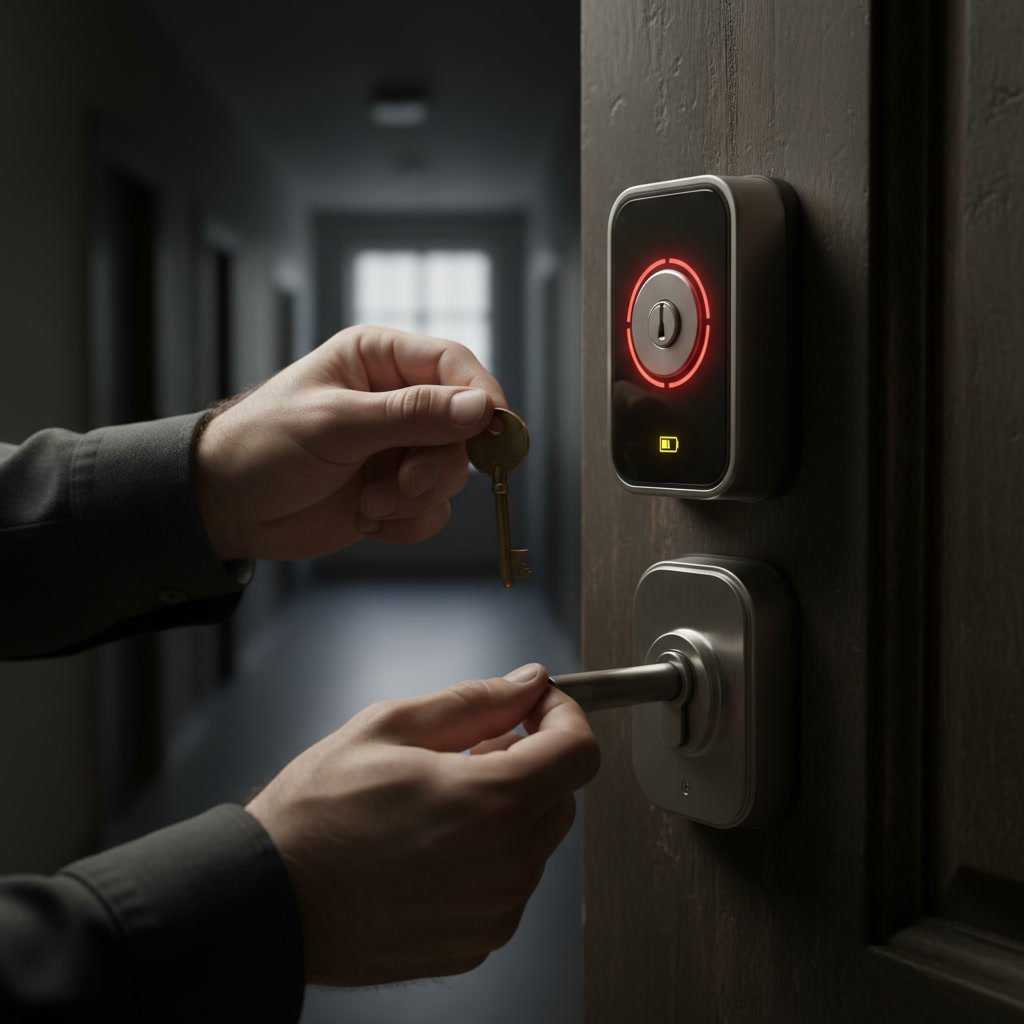
When electronic lock batteries die completely, the keypad and electronic components stop functioning entirely. You cannot enter your code, use a key fob, or access smartphone controls if equipped. Many people assume they’re completely locked out, but most electronic locks include a mechanical key override specifically for this situation.
The override keyhole is typically hidden beneath a removable cover on the exterior side of the lock. Keep this physical key in an accessible location separate from your main keyring. Store one with a trusted neighbor or family member who can assist during an emergency.
Some advanced locks allow temporary battery connection to the exterior terminal posts. A standard 9-volt battery touched to these contacts provides enough power to enter your code and unlock the door one time, giving you access to replace the main batteries inside.
Preventing Emergency Lockouts Through Regular Maintenance
Establishing a proactive battery replacement schedule eliminates surprise failures. Mark your calendar to check battery status every three months, even if no warning signs appear. Many people align battery changes with daylight saving time adjustments as an easy reminder twice yearly.
When you replace batteries, always use fresh cells from the same manufacturer and production batch. Never mix old and new batteries or combine different brands. Mismatched batteries discharge at different rates, causing the stronger cell to attempt charging the weaker one, which generates heat and can damage your lock’s circuitry.
Keep a spare set of batteries in a cool, dry location inside your home. Battery expiration dates matter. Alkaline batteries stored at room temperature maintain 90% of their capacity for five years, but this drops to less than 50% if stored in hot garages or vehicles.
Professional Electronic Lock Assessment and Service
If your electronic lock exhibits warning signs despite recent battery replacement, an underlying issue may exist. Corroded battery contacts, damaged wiring, or failing circuit boards can cause symptoms identical to low battery conditions. Professional diagnosis identifies whether you need simple maintenance or component replacement.
Solution Locksmith LLC provides comprehensive electronic security system maintenance and troubleshooting. Regular professional inspection catches developing problems before they cause failures. Technicians test voltage draw, inspect mechanical components, and verify that firmware updates are current to ensure optimal performance and battery life.
Residents throughout Henrico, Stafford County, and surrounding areas can access expert service for all electronic lock brands and models. Knowing what happens during an emergency lockout service helps you prepare if prevention measures fail.
Staying Ahead of Battery Failure
Electronic locks offer tremendous convenience, but only when maintained properly. Recognizing early warning signs gives you control over the situation rather than facing an emergency at the worst possible time. Replace batteries at the first indication of problems, keep backup power sources readily available, and never ignore low battery warnings.
Temperature awareness, quality battery selection, and routine maintenance schedules transform electronic locks from potential liabilities into reliable security assets. When you treat battery management as a critical security practice rather than an afterthought, your electronic lock will provide years of trouble-free service.
Solution Locksmith LLC offers 24/7 support for electronic lock emergencies, battery replacement, and complete system installations throughout Ruther Glen and surrounding communities. Whether you need immediate lockout assistance or want to upgrade to a more reliable electronic security system, our team provides professional service when you need it most. Call +15403392006 to schedule service or request emergency assistance.